
Buyer's guide
How to choose a hotel template
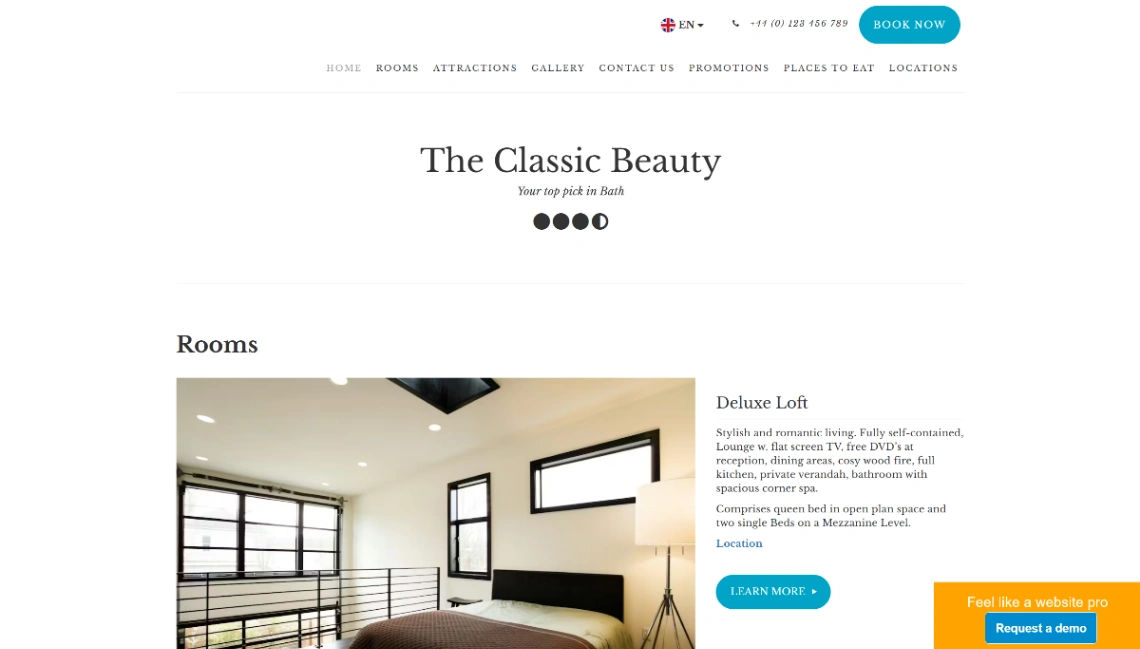
A hotel website sells nights, and the room page is its product page — judge every template there first. Each room type deserves what any product gets: honest photos from the door and the bed, the facts guests filter on (size, bed, view, occupancy), and a live price with its own book button. Guests don't book hotels; they book rooms — a site that presents rooms as a brochure gallery instead of bookable products is a lookbook for someone else's portal.
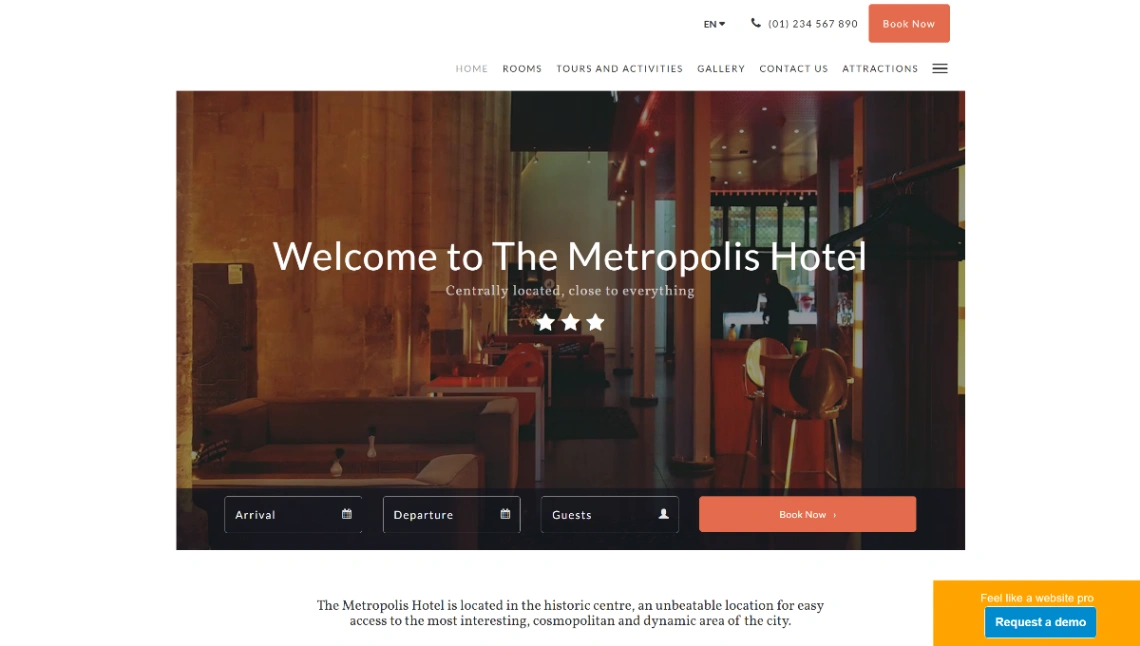
The booking engine is the non-negotiable core, and its truth matters more than its looks: rates and availability synced with whatever system already runs the property, so the website, the front desk and the portals never disagree. The engine-backed platforms in the pinned picks do this natively; a widget bolted onto a brochure site creates two truths, and two truths eventually double-book a wedding weekend.
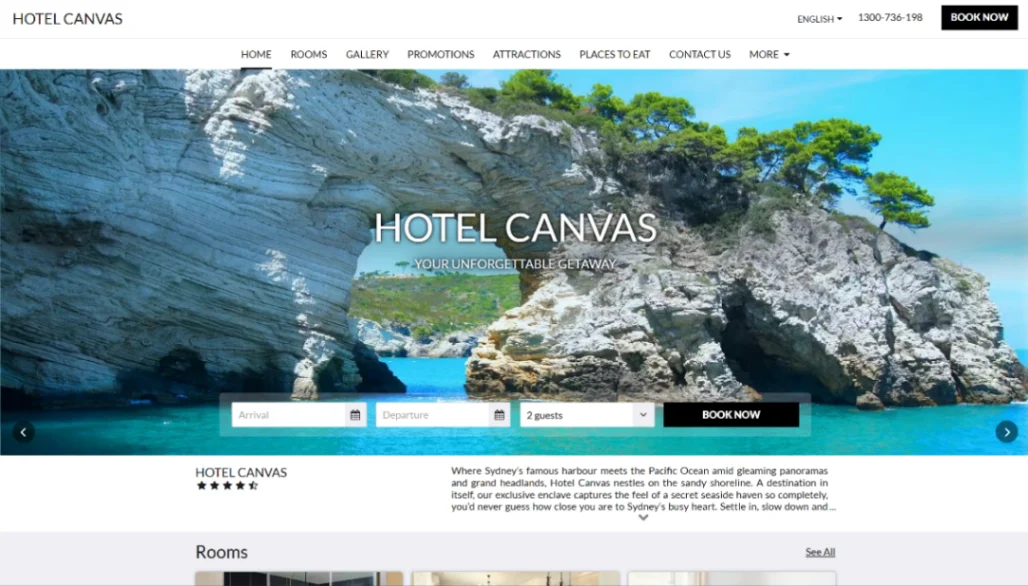
Give direct booking its argument right at the widget: best rate stated, a perk the portals can't match (late checkout, the welcome drink, flexible cancellation), and a human phone number for the guests who book that way. Every direct booking saves the commission — the value stack is how the site pays for itself, but only if it's visible at the moment of decision.
Then work the stay around the booking: upsells at reservation (breakfast, early check-in, the better view for a little more) and a pre-arrival page that answers the questions every guest emails — arrival, parking, check-in times. Revenue per booking and emails per booking move in opposite directions when the template handles both.
FAQ